
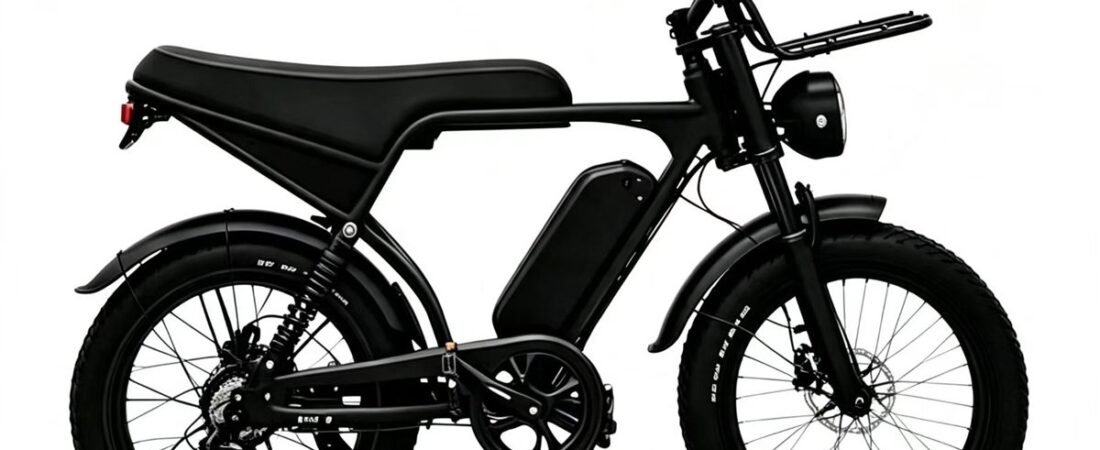
OEM and ODM, defined without the marketing fog
In e-mobility, OEM means the factory builds its own proven design under your brand — graphics, colours, packaging, firmware splash screen. ODM means the factory develops a new design around your brief — your geometry, your component choices, your target price. Both are legitimate; they solve different problems and they cost very different money. Confusing them is the first and most expensive mistake brand buyers make.
Which one actually fits you
Choose OEM when a catalogue model already sells in your market and you need it to carry your identity. Choose ODM only when you have hard evidence that a spec nobody offers will win you volume — a validated customer need, not a hunch. Most first-time private-label programs should start OEM on a proven platform, learn their market, then reinvest in deeper customisation.
The customisation ladder — five rungs, five different budgets
At Rmg Bike the ladder runs: (1) decals, logos and colourways; (2) custom retail packaging and manuals; (3) component swaps — saddle, tyres, display, battery capacity; (4) firmware and app branding; (5) exclusive frame or mould development. Rungs 1–4 start from a 50-piece order on most platforms — including the S18, whose listing already notes custom colour, accessory and function packages. Rung 5 is a tooling conversation.
MOQ honesty by tier
Graphics and packaging: 50 pcs, mixed across models. Component-level changes: typically 100–300 pcs per configuration, because suppliers of the changed part impose their own minimums. Custom moulding: 1,000+ pcs per frame is the realistic floor — anyone quoting a private mould at 50 pieces is quietly planning to amortise it into your unit price.
Tooling and sample costs — what to budget
Expect sample units of your branded configuration to ship within about a week off stock platforms. Custom moulds run 45–90 days to first shots and are usually tooling-paid upfront, refundable against volume milestones. Insist on a signed pre-production sample — the exact unit your container will replicate — before mass production starts.
Who owns the certificates
A re-badge of an existing certified model rides on the original EN15194, CE, FCC or EN71 files — confirm the certificate holder permits brand variants. A component change (battery, motor, display) can invalidate EMC and safety reports; ask which tests rerun and who pays. For kids products the US CPC story is per-model — a new colour is fine, a new brake is not. Rmg Bike’s certificate suite (CE, FCC, UL, CPC, EN71, EN15194, UN38.3, MSDS) and the recertification path per tier are documented on the OEM/ODM program page.
IP and exclusivity — set expectations honestly
NNDAs are standard and useful. Graphic and packaging artwork you supply is yours — ask for written confirmation it won’t be reused. Full frame exclusivity is a commercial term, not a courtesy: it is granted against committed annual volume, and a factory promising free forever-exclusivity is promising nothing. A realistic first ask is market-segmented exclusivity for your configuration during the ramp-up period.
Timeline: from brief to first container
Working benchmarks: graphics-tier OEM — 30–45 days; component-tier — 45–60 days; tooling projects — 3–6 months including sample rounds. The difference between a project that slips and one that ships is almost always decision latency on artwork and sample sign-off, not factory capacity.
QC for a brand you carry
Once your name is on the head tube, inspection depth changes: verify against the signed golden sample, run drop and assembly tests on your packaging, check firmware version and boot screen on every batch, and photograph before shipment. Standard practice is a 2–3% free spare-part value on first orders so early warranty cases don’t stall while parts ship internationally.
Your next step
Send your brand brief — target market, volume, which rung of the ladder you’re considering — through the bulk inquiry desk. You will get a written tier-by-tier quotation with MOQ, tooling and lead-time bands within 24 working hours. If you’re still choosing platforms, start from the 30-model catalogue and the buyer FAQ.