
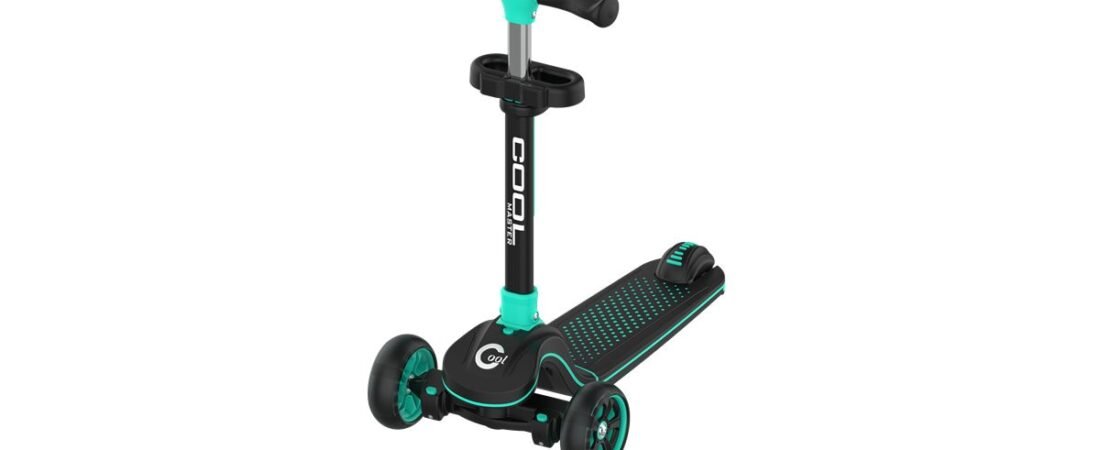
The best kids electric scooter is not the fastest one — it is the one your child can control safely from the first ride. Use the five checkpoints below and you will narrow the field faster than any spec sheet.
1. Match the deck and wheel size to age and height
Younger riders (roughly 3–6) do best on low decks and small, stable wheels; older kids and lighter teens can move up to larger wheels that roll over cracks more smoothly. If your household has mixed ages, an adjustable stem such as the A02 Adjustable Kids Scooter grows with the rider instead of being replaced every year.
2. Respect the weight limit — and read it correctly
A manufacturer’s load rating includes the child plus a margin. A model advertised for up to 100 kg on the A05 gives headroom for a taller child or a parent riding along at the start. Never buy to the exact child weight with zero margin.
3. Choose the brake type you can actually teach
For small riders a foot-fender brake is intuitive; for faster scooters a hand brake gives predictable stops. Whichever you pick, practise braking in an empty lot before street use.
4. Cap the speed for beginners
A throttle that limits top speed — or a seat-assist stage that lets a child glide before standing — smooths the learning curve. The A01 seat-to-glide scooter is built around exactly this “sit first, stand later” progression.
5. Make it visible at dusk
Integrated lights matter more than buyers expect. A light-strip deck or flashing wheels — see the A08 Light-Strip Scooter and A14 Flash-Wheel Scooter — make a small rider far easier for drivers to notice.
Quick decision table
| Age 3–5, first ride | Low deck, seat option, capped speed | A01 · A12 |
| Age 5–8, growing fast | Adjustable handlebar | A02 · A09 |
| Age 8+, confident | Larger wheels, hand brake | 8.5″ · 10″ |
Exact motor power, range and charge time differ by model and are listed on each product page. For schools, rental fleets or bulk gifting, our OEM/ODM team can configure a spec to your market.